18th century French Chinoiserie Giltwood Harp 1770 also known as And magnificent 18th century French Chinoiserie Giltwood Harp
Items for Sale » Anton Venoir Interiors »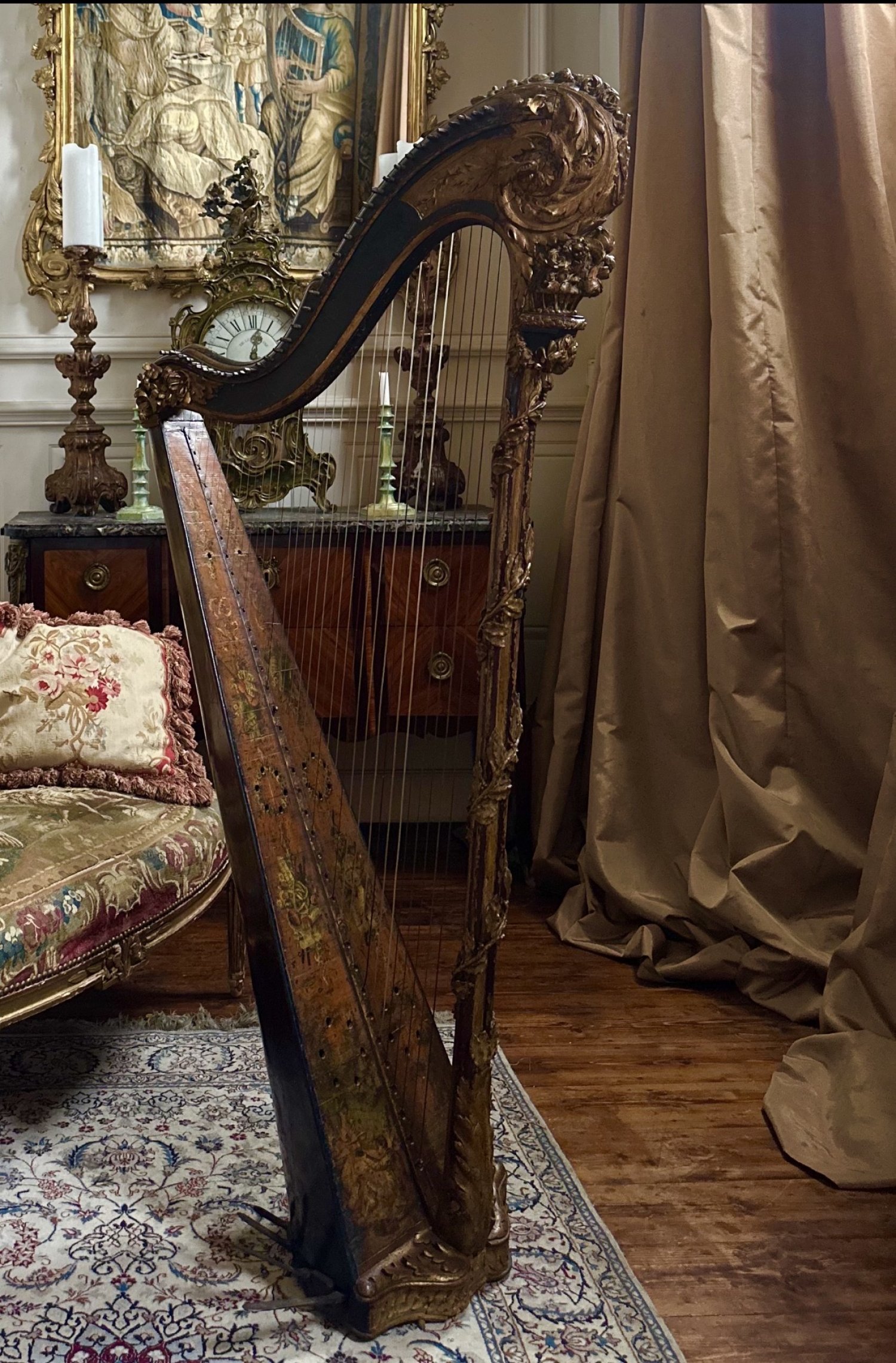
Description
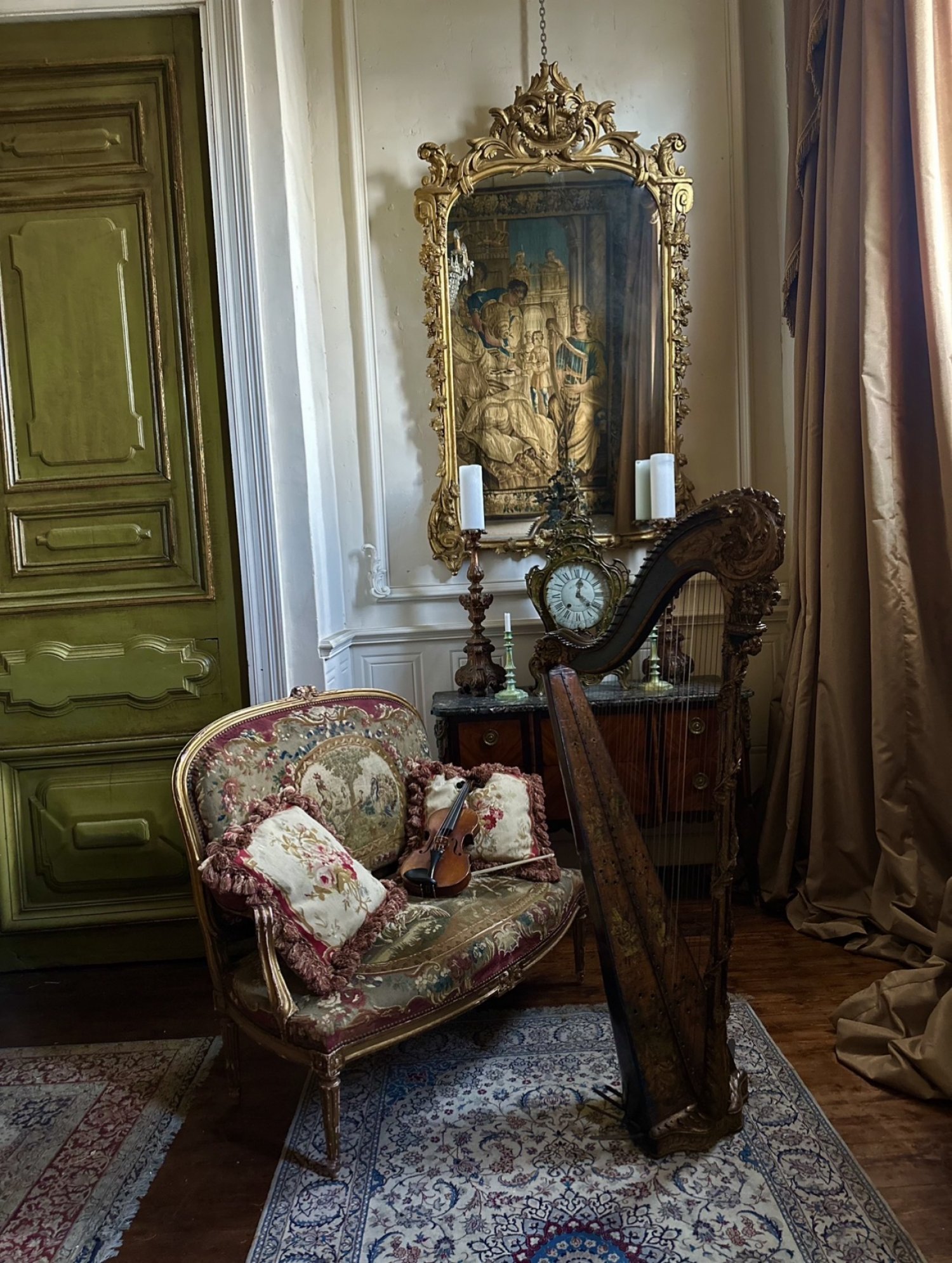
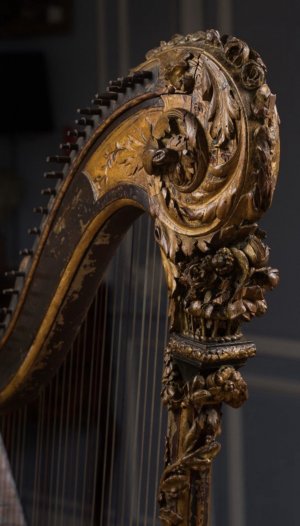
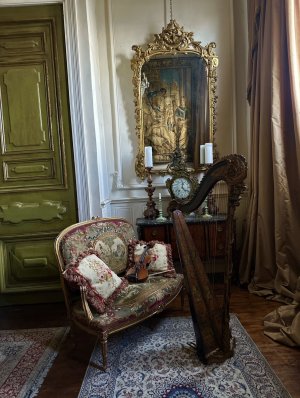
A magnificent 18th century French Chinoiserie Giltwood & VernisMartin Harp
An exceptionally decorative French harp, conceived as both a musical instrument and an object of luxury, with a richly carved and gilded frame and painted soundboard decorated with delicate floral and chinoiserie ornament.
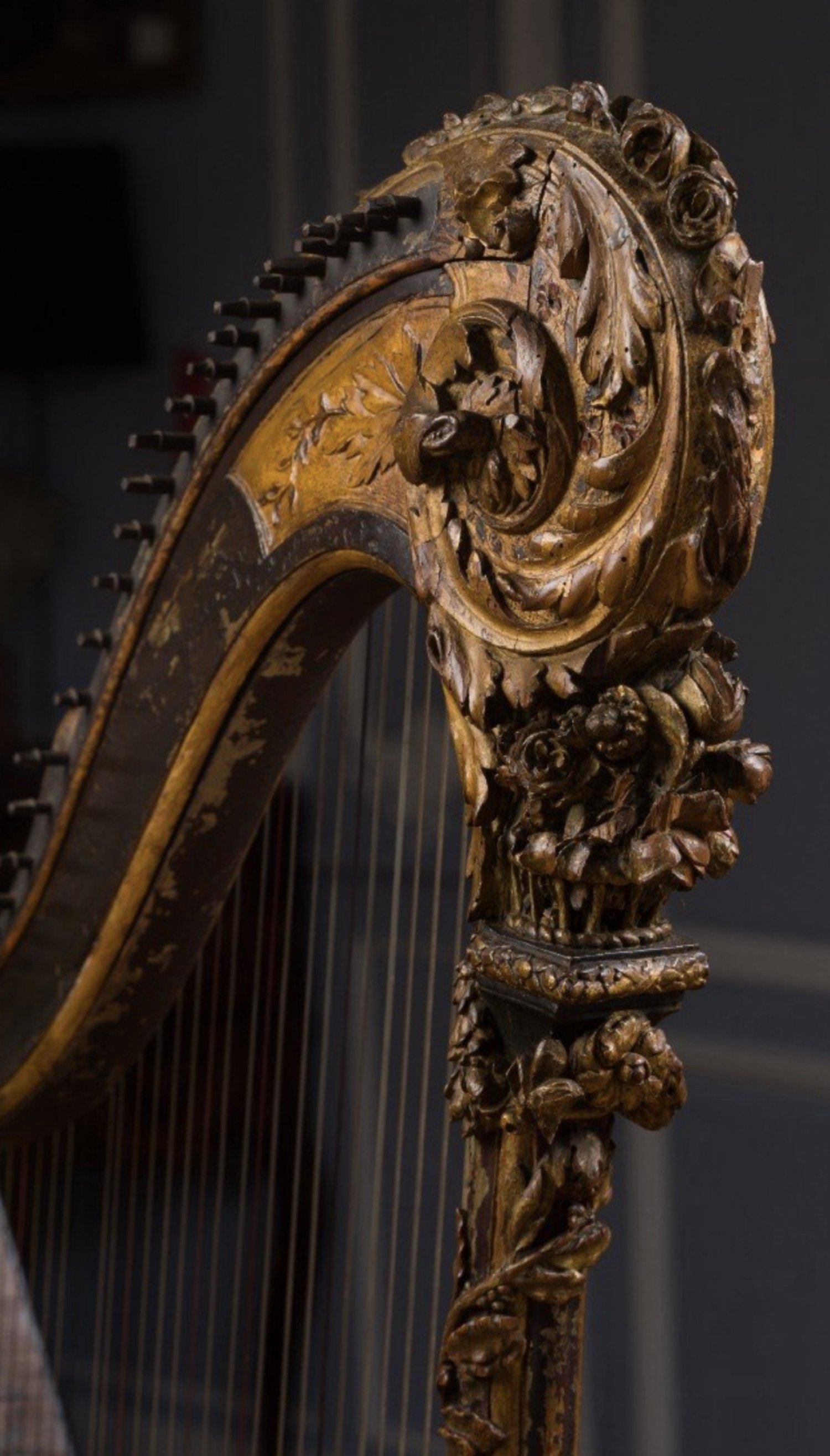
The tall scrolling neck is finished in a dark ground and enriched with gilded mouldings, terminating in an elaborate carved composition of scrolling acanthus, flowers, rosettes and foliate ornament. The slender forepillar is similarly carved and gilded, with cascading foliage and floral motifs extending almost its entire length and terminating in an ornamental gilt base.
The wooden soundbox retains extensive painted decoration, including flowers, foliage and chinoiserie-inspired motifs, executed in delicate colours against the warm natural ground of the timber. The contrast between the painted soundboard, dark neck and richly aged gilding gives the instrument the highly decorative character associated with French luxury harp making around the end of the eighteenth century.
The harp enjoyed an extraordinary flowering in France during the reigns of Louis XV and Louis XVI and became particularly fashionable in aristocratic society during the latter decades of the eighteenth century. Its popularity was greatly encouraged by Marie Antoinette, herself an accomplished harpist, whose association with the instrument helped establish it as one of the most fashionable accomplishments of courtly life.
As demand increased, Parisian harp makers transformed the instrument into an increasingly elaborate decorative object. Harps were carved, gilded and painted with flowers, landscapes, trophies and chinoiserie ornament, while fashionable lacquer-like finishes — including those associated with the celebrated tradition of vernis Martin — reflected the French fascination with Asian lacquer and the wider taste for chinoiserie.
The present harp belongs aesthetically to this tradition. Its combination of painted chinoiserie decoration, extensive carved and gilded ornament and elegant scrolling form demonstrates the point at which musical instrument making crossed into the decorative arts: such harps were intended not merely to be played, but to form part of the furnishing and visual theatre of an elegant salon.
The surviving wear to the gilding and painted decoration forms an important part of the instrument’s historic character, revealing successive layers of surface and giving considerable depth to the carved ornament.
Comparable examples: richly decorated French single-action harps of the late Louis XVI period, including surviving instruments by Parisian makers such as Sébastien Renault and François Chatelain, demonstrate the contemporary fashion for gilding, painted decoration, chinoiserie and lacquer-like finishes.
Price: $38000
Anton Venoir Interiors
26/321 Chapel Street
Prahran VIC 3181
By appointment only
www.antonvenoirinteriors.com
T: 0412 561 809
info@antonvenoirinteriors.com